
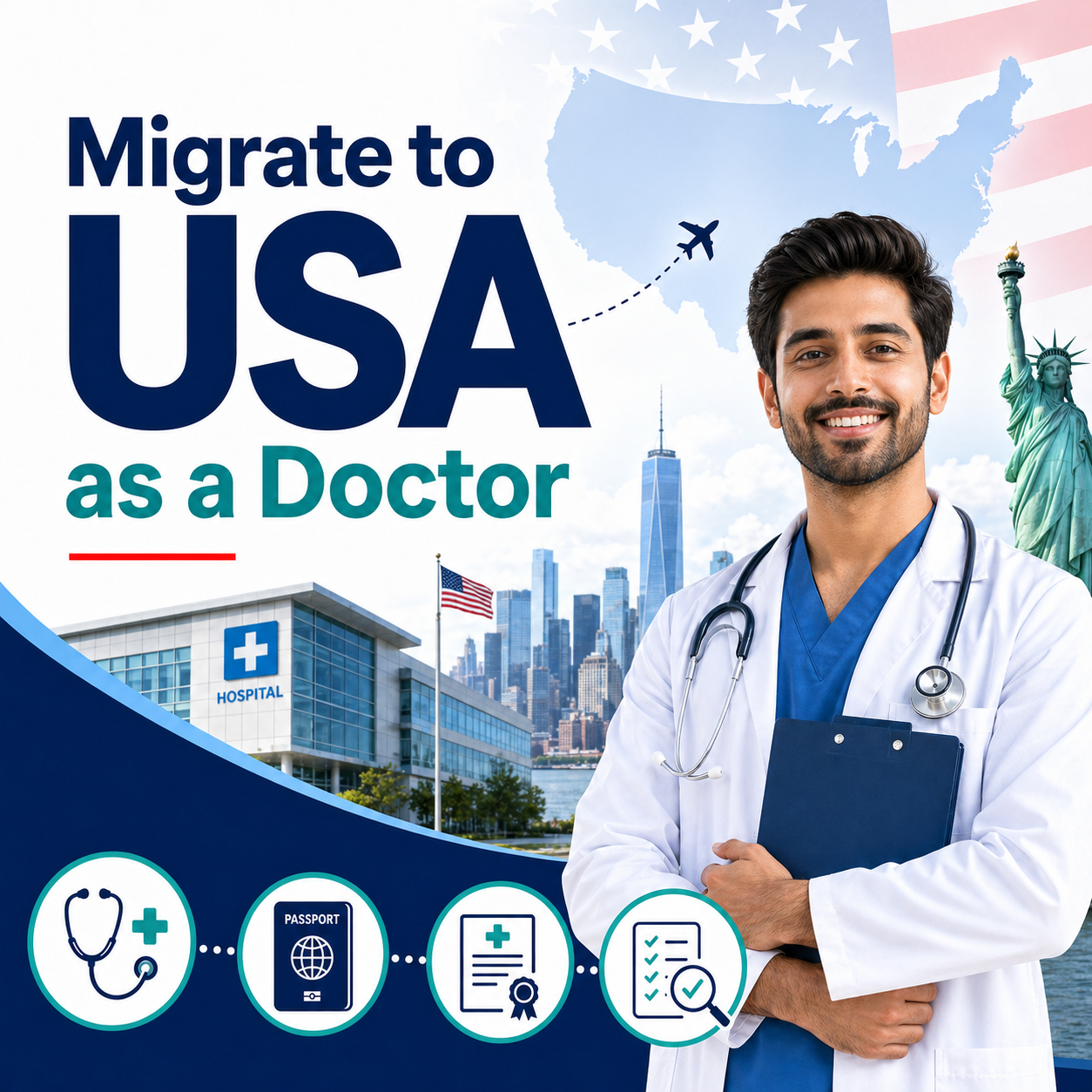
Migrate to USA as a doctor
This course helps doctors plan migration to USA with confidence through practical structured expert guidance. It covers licensing, registration, credential assessment, exams, visa requirements, documents, timelines, costs, job preparation, and relocation planning. Learners understand professional pathways, compliance expectations, common mistakes, and settlement essentials, enabling them to organise evidence, reduce delays, and make informed decisions before building an international medical career.
$179.00
Migrating to the USA as a Doctor
A practical, step-by-step guidance product for internationally trained doctors who want to understand the U.S. medical pathway, ECFMG Certification, USMLE planning, residency strategy, visa options, and long-term career direction before making costly decisions.
Important: Do not wait until Match season, graduation, or visa deadlines to understand the U.S. doctor pathway. ECFMG Certification, USMLE preparation, clinical experience, documents, recommendation letters, residency applications, visa planning, and family decisions can take months or years. Early planning can protect your time, money, and career future.
The USA can be one of the most rewarding destinations for doctors — but it is also one of the most competitive.
Many international medical graduates dream of practising medicine in the United States. The opportunity can be life-changing, but the process is not simple. You must understand ECFMG Certification, USMLE exams, residency applications, specialty competitiveness, visa routes, state licensure, and long-term immigration options.
This guidance helps you stop guessing and start planning strategically. It is designed to give you a clear overview of the U.S. doctor migration pathway before you spend money on exams, applications, agencies, documents, travel, or relocation.
Doctor-Specific Pathway
Understand the pathway for international medical graduates, resident doctors, specialists, and physicians exploring the USA.
USMLE & ECFMG Clarity
Learn how ECFMG Certification, Step 1, Step 2 CK, Step 3, and pathway requirements fit into your plan.
Residency Strategy
Understand how specialty choice, U.S. clinical experience, letters, CV strength, and Match planning affect competitiveness.
Action-Focused Guidance
Move from confusion to a structured next-step plan for exams, documents, applications, visas, and long-term career goals.
Why This Guidance Matters
The U.S. pathway for doctors is not a single application. It is a sequence of decisions. Your medical school eligibility, ECFMG status, USMLE timing, exam performance, clinical experience, specialty choice, residency application, visa route, and state licensure strategy all matter.
Many doctors lose time because they begin in the wrong order. Some focus only on exams without understanding residency competitiveness. Others collect documents late, misunderstand J-1 and H-1B differences, underestimate U.S. clinical experience, or assume that being a qualified doctor overseas automatically creates a direct U.S. practice pathway. This guidance helps you prepare with a clearer, more realistic plan.
What This Guide Helps You Do
Get a clear overview of how ECFMG Certification, USMLE exams, residency, visas, state licensure, and long-term planning connect.
Understand the role of medical school eligibility, ECFMG application steps, pathway requirements, document verification, and certification timing.
Learn how Step 1, Step 2 CK, and Step 3 fit into your timeline, residency goals, visa options, and licensure direction.
Understand how specialty choice, application timing, ERAS planning, recommendation letters, personal statements, U.S. clinical experience, and interview preparation can affect your Match strength.
Learn the basic differences between common physician routes such as J-1 clinical training sponsorship, H-1B possibilities, J-1 waiver concepts, Conrad 30, and physician National Interest Waiver awareness.
Avoid weak sequencing, late document preparation, unrealistic specialty targeting, poor Match planning, visa confusion, and generic advice that is not designed for doctors.
Why the USA Doctor Pathway Deserves Serious Attention
- The United States offers world-recognised medical training, advanced clinical exposure, research opportunities, and diverse residency and fellowship pathways.
- International medical graduates can play an important role in U.S. healthcare, especially when they plan early and build a competitive profile.
- ECFMG Certification is a critical milestone for IMGs who want to enter ACGME-accredited U.S. residency or fellowship training.
- Visa planning is essential because many doctors use J-1 sponsorship for clinical training, while some situations may involve H-1B or later waiver/residence strategies.
- For the right applicant, the USA can offer long-term professional growth, specialist training, career prestige, family opportunity, and future immigration planning possibilities.
Who This Is For
Doctors who studied outside the United States or Canada and want to understand the U.S. pathway clearly.
Students who want to make smarter decisions about USMLE timing, electives, CV building, and long-term residency strategy.
Applicants who want to understand how exams fit into ECFMG Certification, Match strategy, and future licensure.
Candidates who need clarity on competitiveness, specialty targeting, application planning, and visa implications.
Doctors who want to understand how U.S. training, visa timing, relocation, dependants, and long-term settlement may affect family planning.
Doctors who do not want to waste months reading scattered information, following rumours, or preparing in the wrong order.
What You Get Inside This Guidance
Your medical career is too valuable for guesswork.
A weak sequence, late document preparation, poor exam planning, unrealistic specialty choice, missed visa requirement, or badly prepared residency application can cost you time, money, and opportunity. This guidance helps you understand the pathway before the pressure begins.
Common Mistakes This Guidance Helps You Avoid
- Starting USMLE preparation without understanding the full ECFMG and residency pathway.
- Assuming overseas medical experience automatically leads to U.S. practice rights.
- Choosing a specialty without understanding competitiveness for international medical graduates.
- Waiting too long to prepare documents, recommendation letters, clinical experience, or application materials.
- Confusing ECFMG Certification, residency eligibility, state licensure, and immigration eligibility.
- Ignoring the difference between J-1 training sponsorship, H-1B possibilities, waiver planning, and long-term residence options.
- Following generic migration advice that is not designed for doctors entering the U.S. medical system.
This Guidance Is Not For You If…
- You are looking for guaranteed ECFMG Certification, USMLE success, residency Match, visa approval, employment, licensure, or permanent residence.
- You want someone to submit your ECFMG, USMLE, residency, or immigration application on your behalf.
- You are not willing to prepare documents, research programs, build a competitive profile, or follow a structured process.
- You want a shortcut instead of a serious professional migration strategy.
Important Guidance Note
This product provides educational guidance and pathway-planning information only. It does not guarantee ECFMG Certification, USMLE results, residency Match, fellowship placement, employment, visa approval, medical licensure, permanent residence, or any immigration outcome. For personalised U.S. immigration advice, consult a qualified U.S. immigration attorney. For medical certification, examination, residency, and licensure decisions, always refer directly to ECFMG, USMLE, NRMP, ERAS, state medical boards, and official U.S. government sources.
Related Topics
Top related keywords for Migrate to USA as a doctor:
ECFMG certification
USMLE pathway
medical licence to practise
credential verification
English language evidence
clinical experience requirements
hospital recruitment
J-1 or H-1B visa
sponsor-ready jobs
family relocation planning
settlement planning