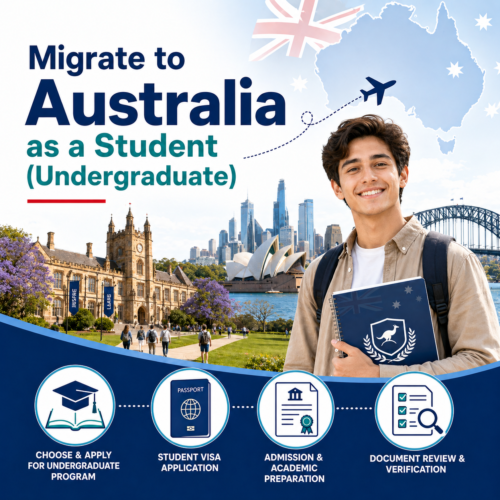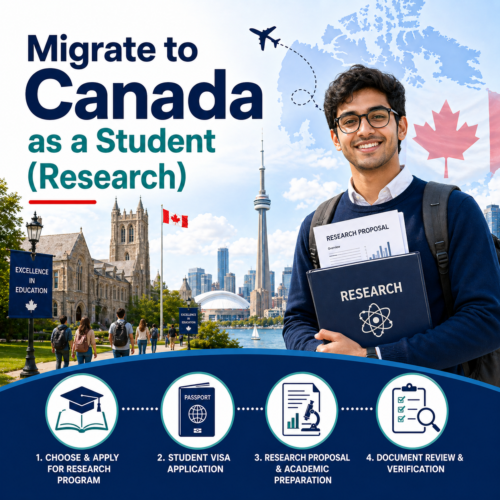


Migrate to USA as a student (Postgraduate)
This course helps postgraduate students plan migration to USA with confidence through practical structured expert guidance. It covers admission planning, visa requirements, documents, timelines, costs, accommodation, compliance, and arrival preparation. Learners understand key study pathways, application steps, common mistakes, and settlement essentials, enabling them to organise evidence, reduce delays, and make informed decisions before starting their international education journey abroad.
$79.00
Migrating to the USA as a Student
A practical, step-by-step guidance product for students who want to understand the U.S. study pathway, school admission, Form I-20, SEVIS, visa preparation, funding evidence, arrival planning, work options, and long-term career strategy before making costly mistakes.
Important: Do not wait until admission deadlines, visa interview season, or travel dates are close. U.S. study planning may involve school selection, application documents, financial proof, Form I-20, SEVIS fee, DS-160, visa interview preparation, housing, travel timing, and status rules. Starting late can put your intake, money, and future plans at risk.
Studying in the USA can change your future — but only if you choose the right pathway and prepare correctly.
The United States remains one of the most attractive destinations for international students because of its universities, community colleges, graduate schools, research opportunities, career exposure, and global recognition. But the process is not simply “apply to any school and book a visa interview.”
You need to understand which study route suits you, how to choose a credible institution, how to prepare your application, how Form I-20 and SEVIS fit into the visa process, what financial evidence may be needed, and how to protect your student status after arrival. This guidance helps you move with clarity instead of guesswork.
Student Pathway Clarity
Understand undergraduate, graduate, community college, vocational, English-language, and transfer-study planning options.
Clear Roadmap
Follow a structured sequence from school research to admission, I-20, SEVIS, visa interview, arrival, and status maintenance.
Visa-Ready Preparation
Learn what to prepare for school admission, Form I-20, SEVIS fee, DS-160, interview evidence, financial proof, and travel timing.
Action-Focused Guidance
Move from confusion to a practical USA study plan with clear next steps for applications, visa preparation, and arrival.
Why This Guidance Matters
Many students lose time and money because they begin the U.S. study process in the wrong order. Some choose schools without checking whether they fit their goals. Some prepare weak financial evidence. Some misunderstand the visa interview. Others think admission alone guarantees visa approval or future work opportunities.
This guidance helps you understand the full pathway before you spend money on applications, deposits, test fees, document preparation, visa fees, travel, or relocation. It is designed to help you plan smarter, avoid common errors, and make more confident decisions.
What This Guide Helps You Do
Get a clear overview of how school admission, Form I-20, SEVIS, DS-160, visa interview, arrival rules, and student-status planning connect.
Understand how undergraduate, graduate, community college, vocational, pathway, English-language, and transfer options may fit your goals.
Learn how academic documents, transcripts, statements, test scores, recommendation letters, CVs, and application timing can affect your admission plan.
Plan for tuition, living costs, scholarships, sponsorship evidence, bank documents, family funding, and realistic affordability before applying.
Understand the role of SEVP-approved schools, Form I-20, SEVIS fee, DS-160, visa interview, study purpose, financial proof, and travel timing.
Learn why full-time study rules, campus work, CPT, OPT, STEM OPT, transfers, dependants, and future employment planning matter.
Why the USA Student Route Deserves Serious Attention
- The United States offers a wide range of universities, colleges, vocational institutions, English-language programs, and graduate schools.
- Students can choose from flexible academic routes, including bachelor’s degrees, master’s degrees, doctoral programs, associate degrees, certificates, and transfer pathways.
- Eligible F-1 students may access practical training options such as CPT or OPT when official requirements are met.
- Students in eligible STEM fields may be able to plan for a STEM OPT extension after post-completion OPT.
- For the right applicant, U.S. study can support academic growth, career development, global exposure, family planning, and future professional opportunities.
Who This Is For
Students who want to study in the USA and need a clear overview of the admission, visa, and arrival process.
Students planning bachelor’s degrees, associate degrees, community college routes, or transfer pathways.
Bachelor’s graduates planning master’s, doctoral, professional, or postgraduate study in the United States.
Applicants considering technical, career-focused, certificate, or vocational study options.
Students who want to understand dependant planning, spouse and child considerations, schooling, costs, and relocation timing.
People who do not want to waste months reading scattered information, applying blindly, or preparing documents in the wrong order.
What You Get Inside This Guidance
Your USA study journey is too important for guesswork.
A weak school choice, missed application deadline, unclear financial evidence, poor visa interview preparation, or misunderstanding of student-status rules can damage your plans. This guidance helps you prepare before the pressure begins.
Common Mistakes This Guidance Helps You Avoid
- Choosing schools based only on popularity instead of fit, affordability, accreditation, location, and future goals.
- Misunderstanding the difference between admission, Form I-20, SEVIS, visa approval, and U.S. entry.
- Preparing weak financial evidence or unclear visa interview answers.
- Applying too late for scholarships, funding, housing, or visa appointments.
- Assuming a student visa automatically leads to work, H-1B sponsorship, or permanent residence.
- Ignoring full-time study, CPT, OPT, transfer, and status-maintenance rules.
- Making travel plans without understanding entry timing and school start dates.
- Following generic study-abroad advice that does not explain the U.S. student visa process clearly.
This Guidance Is Not For You If…
- You are looking for guaranteed admission, scholarship approval, Form I-20 issuance, visa approval, U.S. entry, CPT, OPT, STEM OPT, employment, H-1B sponsorship, or permanent residence.
- You want someone to submit your school, SEVIS, visa, or immigration application on your behalf.
- You are not willing to prepare documents, research schools, compare options, or follow a structured process.
- You want a shortcut instead of a serious USA study-and-career strategy.
Important Guidance Note
This product provides educational guidance and pathway-planning information only. It does not guarantee school admission, scholarships, Form I-20 issuance, visa approval, U.S. entry, CPT, OPT, STEM OPT, employment, H-1B sponsorship, permanent residence, or any immigration outcome. For personalised U.S. immigration advice, consult a qualified U.S. immigration attorney. For school admission, SEVIS, F-1 status, M-1 status, CPT, OPT, STEM OPT, and status-maintenance decisions, always refer directly to official U.S. government sources and your school’s designated official.
Related Topics
Top related keywords for Migrate to USA as a student (Postgraduate):
F-1 visa
I-20 and SEVIS
master's degree pathway
graduate school admission
tuition deposit and funding
English language requirements
work rights during study
OPT and CPT
H-1B planning
relocation preparation
international student guidance